
Environmental Initiatives
ESG Report PDF (3.3MB)
GRI Standards Comparison PDF (362KB)
- 1. Energy Management
- 2. Environmental Considerations by Engineering Management
- 3. Stakeholder Engagement to Improve Property Performance
- 4. Environmental Pollution Prevention
From the perspective of improving unitholders' value in the long term, NIPPON REIT recognizes that environmental consideration is an important issue in the real estate investment management business and works to reduce its environmental impact through measures such as the renovation of existing facilities and the improvement of the management of the properties held by NIPPON REIT. Moreover, NIPPON REIT aims to achieve environmentally friendly investment management by taking facility users’ comfort, biodiversity and other factors into consideration.
1. Energy Management
1-1. Premise
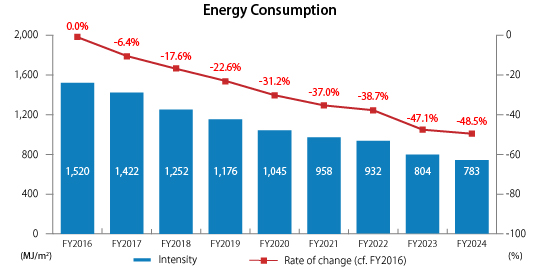
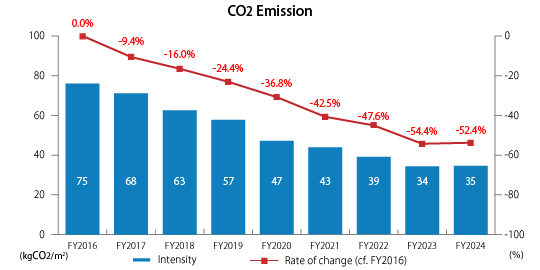
Based on the Sustainability Policy articles “1. Effort to save energy and reduce greenhouse gas emissions” and “2. Realization of a recycling-oriented society,” NIPPON REIT has set reduction targets for energy consumption and greenhouse gas emissions to improve the environmental performance of its real estate portfolio.
In order to achieve these targets, NIPPON REIT’s asset management company, SRA implements measures to improve the operational performance of buildings, conduct energy efficiency retrofits and engage tenants on energy efficiency based on its “Energy Conservation Policy,” which stipulates operational policies for improving energy efficiency of the real estate portfolio, and “GHG Emissions Reduction Policy,” which aims to create a low-carbon society.
1-2. Reduction Targets for Energy Consumption and Greenhouse Gas
Sustainability Policy ①・③
At SRA’s Sustainability Promotion Conference, budget and performance management (ascertaining the degree of achievement against the actual value target, comparing and analyzing with the previous fiscal year) is performed, generally on a quarterly basis. Furthermore, we have identified issues for each property and made improvements by referring to results of CO2 reduction potential and energy-saving diagnoses made by a third-party organization.
Note: Calculated based on Japanese fiscal year which starts from April 1 and ends on March 31.
This table can be scrolled sideways.
| FY2016 (Base Year) |
FY2017 | FY2018 | FY2019 | FY2020 | FY2021 | FY2022 | FY2023 | FY2024 | FY2025 | Rate of change(%) (cf. FY2016) |
||
|---|---|---|---|---|---|---|---|---|---|---|---|---|
| Energy Consumption | Total (MJ) | 467,828,166 | 467,719,396 | 460,970,411 | 457,258,994 | 424,633,654 | 381,024,918 | 369,686,036 | 319,804,224 | 306,079,335 | 280,866,182 | -40.0 |
| Intensity (MJ/㎡) | 1,520 | 1,422 | 1,252 | 1,176 | 1,045 | 958 | 932 | 804 | 783 | 729 | -52.0 | |
| CO2 Emission | Total (tCO2) | 23,292 | 22,483 | 23,302 | 22,052 | 19,403 | 17,284 | 15,713 | 13,776 | 14,046 | 13,136 | -43.6 |
| Intensity (kgCO2/㎡) | 75 | 68 | 63 | 57 | 47 | 43 | 39 | 34 | 35 | 34 | -54.9 | |
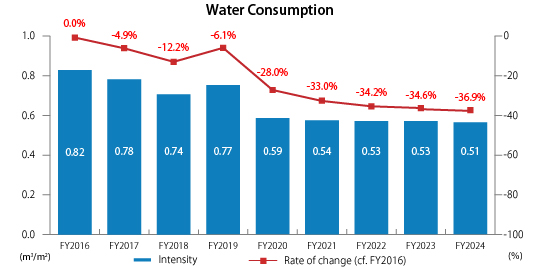
| Water Consumption | Total (㎥) | 244,964 | 254,822 | 270,526 | 305,605 | 239,361 | 218,464 | 213,685 | 214,532 | 202,281 | 184,811 | -24.6 |
| Intensity (㎥/㎡) | 0.82 | 0.78 | 0.74 | 0.77 | 0.59 | 0.54 | 0.53 | 0.53 | 0.51 | 0.48 | -41.5 | |
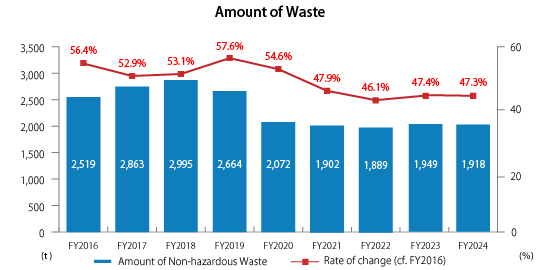
| Amount of Waste | Amount of Non-hazardous Waste (t) | 2,519 | 2,863 | 2,995 | 2,664 | 2,072 | 1,902 | 1,889 | 1,949 | 1,918 | 1,674 | - |
| Amount of Incineration (t) | 1,035 | 1,348 | 1,404 | 1,130 | 941 | 990 | 1,014 | 1,010 | 1,009 | 878 | - | |
| Recycling Quantity (t) | 1,422 | 1,514 | 1,591 | 1,534 | 1,130 | 912 | 871 | 924 | 909 | 796 | - | |
| Recycling Rate (%) | 56.4 | 52.9 | 53.1 | 57.6 | 54.6 | 47.9 | 46.1 | 47.4 | 47.3 | 47.5 | - |
| Note : | All figures from FY2023 onward, with some exceptions, have received the third-party assurance of Sustainability Accounting Co., Ltd.. |
|---|
2. Environmental Considerations by Engineering Management
2-1. Reducing Energy Consumption
■ 2-1-1. Introduction of LED
Sustainability Policy ①・②
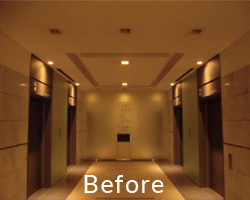
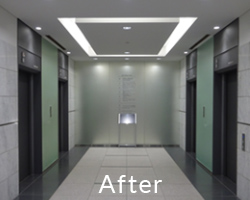
Utilizing the government’s subsidy program, NIPPON REIT is actively promoting the introduction of LED lighting to reduce energy consumption. The energy consumption of the underlying properties is reduced, and a brighter and more comfortable environment is provided by converting lighting fixtures in common areas and leased areas, and emergency lighting fixtures (guide lights and emergency lights) to LEDs.
As of June 30, 2026
| LED Lighting Ratio |
92 Properties 58.2% of Gross Floor Area |
■ 2-1-2. Adoption of Renewable Energy Electricity
Sustainability Policy ①
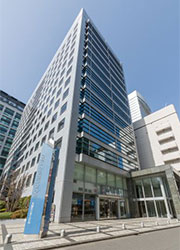
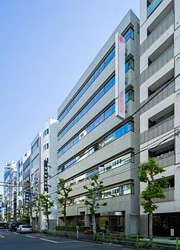
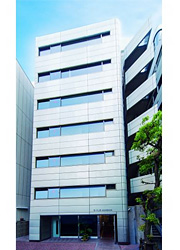
As part of its efforts to reduce CO2 emissions, NIPPON REIT has introduced electricity generated from renewable energy sources at certain properties within its portfolio.
Going forward, NIPPON REIT will continue to consider expanding the use of renewable energy electricity, taking into account the characteristics and operational conditions of each property, while steadily pursuing initiatives to reduce environmental impact.
Properties with Renewable Energy Systems Installed
2-2. Water Conservation
■ 2-2-1. Installment of Water Saving Device (Example: FORECAST Gotanda WEST)
Sustainability Policy ①

Water-saving toilets have been installed at multiple properties as part of our water conservation initiatives.
This initiative not only reduces water consumption but also contributes to lower electricity usage for water-pumping systems, thereby helping to reduce CO2 emissions.
| Before | After | Reduction rate |
|---|---|---|
| 9.2ℓ/toilet flush | 5.5ℓ/toilet flush | 40% |
Note: The table above indicates the average amount of water used per toilet flush before and after the installation of the water-saving equipment.
3. Stakeholder Engagement to Improve Property Performance
3-1. Green Lease
Sustainability Policy ①・⑤
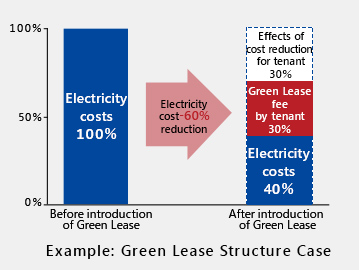
Green lease agreements are concluded with tenants to ensure mutual cooperation between individual building owners and tenants in promoting environmental measures.
What is Green Lease Agreement?
It is an agreement specifying that building owners
and tenants shall cooperate with each other to
reduce environmental burden.
The agreement contains provisions to facilitate
renovation toward more environmentally-friendly
office buildings by reducing building owners'
investment burden through sharing the economic
merits generated as a result of energy-saving
renovation works among building owners and tenants.
3-2. Tenants and Stakeholder Engagement to Improve Property Performance
Sustainability Policy ①・⑤
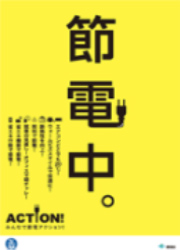
- ①NIPPON REIT prepared letters to tenants requesting reduced energy consumption, distributed manuals for office users and put posters on each floor to raise awareness about energy efficiency.
- ②The property management company receives ESG - related training for the purpose of promoting increased awareness of environmental consideration in daily operations.
- ③For electronic toilets, the temperature settings for the heater and water for cleansing are controlled and adjusted for each season.
- ④Electric water heaters in staff kitchens are managed and their temperature settings are adjusted for each season.
- ⑤The temperature settings and hours of operation of air conditioning and lighting for common use space are adjusted by means such as timer control, Environmental Management Systems (EMSs) and human presence sensors for lighting.
4. Environmental Pollution Prevention
Sustainability Policy ③
Prior to finalizing an agreement to purchase real estate, a due diligence is always conducted by an expert to verify legal compliance. NIPPON REIT also conducts a due diligence in advance to check for the presence of soil contamination or specified hazardous substances, such as asbestos, to identify and avoid properties that are a risk in terms of their impact on the natural environment.