External Evaluation
GRESB Real Estate Assessment
GRESB is an annual benchmarking assessment that measures ESG (Environmental, Social and Governance) integration of real estate companies and funds and it is also the name of organization which runs the assessment. GRESB was founded in 2009 by a group of major European pension funds who played leading roles in launching Principles for Responsible Investment (PRI).
Currently, more than 150 Investor Members use GRESB data for their investment decision-making and engagement with investees, and several institutions from Japan including Government Pension Investment Fund (GPIF) utilize GRESB Assessment results. In 2026, more than 2,000 listed or private real estate companies/funds participated in GRESB Real Estate Assessment.
In the 2026 GRESB Real Estate Assessment, NIPPON REIT has received “2 Stars” in GRESB Rating, which is based on GRESB Overall Score and its quintile position relative to global participants, and designated as a “Green Star” for the tenth consecutive year since the first participation in 2017, through its high performance both in “Management Component” that evaluates policies and organizational structure for ESG promotion, and “Performance Component” that assesses environmental performance and tenant engagement of its properties. In addition, NIPPON REIT has achieved the highest “A” level for the GRESB Public Disclosure, which assess the width of ESG disclosure.
CDP Climate Change Program

CDP is a global non-profit that operates the world’s only independent environmental disclosure system. In 2025, more than 22,100 companies disclosed information through CDP’s platform, and nearly 20,000 of them received scores.
CDP applies a rigorous and proprietary methodology to assess disclosure quality, risk awareness, environmental management, and evidence of best practice.
CDP is fully aligned with the TCFD framework and holds the world’s largest environmental dataset. Its scoring system is widely used by investors and procurement teams seeking to accelerate progress toward a net-zero, sustainable, and earth-positive global economy.
CDP assessments are rated across eight levels: Leadership Level (A, A-), Management Level (B, B-), Recognition Level (C, C-), and Disclosure Level (D, D-).
NIPPON REIT participated in CDP for the first time in the 2025 assessment cycle and received a score of “B.”
Principles for Financial Action for the 21st Century
SRA has become a signatory to the Principles for Financial Action for the 21st Century (PFA21) in December 2020. PFA21 was established in October 2011 as a guideline for financial institutions seeking to fulfil their roles and responsibilities in shaping a sustainable society, with the Ministry of Environment taking on the role of secretariat.
Environmental Considerations Rating Obtained from Sumitomo Mitsui Banking Corporation (SMBC)
“Environmental Promotion & Analysis Loan” evaluates a company’s environmental performance based on proprietary environmental assessment criteria developed by the Japan Research Institute, Ltd., the SMBC Group’s think tank, when disbursing loans and setting terms.
Under the “Environmental Promotion & Analysis Loan” program, NIPPON REIT was recognized for its outstanding environmental performance in asset management and received an “A” environmental rating.
Environmental Certification
Track Record of Environmental Certification and Evaluation
| Number of Properties | Floor Area (㎡) | Ratio(%)(Note 2) | |
|---|---|---|---|
| Green Certified Building (Note 1) | 32 | 208,849.47 | 52.24 |
| DBJ Green Building Certification | 2 | 28,104.36 | 7.03 |
| Certification for CASBEE for Real Estate | 17 | 130,292.21 | 32.59 |
| BELS Certification | 21 | 110,385.44 | 27.61 |
| Low-Carbon Model Building | 4 | 20,329.78 | 5.09 |
*As of June 30, 2026
| Note 1: | In case when a property holds multiple certifications, number and floor area of one property is included. |
|---|---|
| Note 2: | Ratio of each floor area to the gross floor area of NRT portfolio (399,787.31㎡). |
DBJ Green Building Certification
The DBJ Green Building Certification Program (the Certification) was launched in April 2011 for the purpose of supporting the properties which give proper care to environment and society (Green Building). The program evaluates, certifies and supports properties which are required by society and economy. It makes comprehensive assessment of properties, while evaluating various factors which range from properties’ environmental features to their communication with stakeholders, such as disaster prevention and proper care for surrounding communities.
| Property Name | Certification Rank | Date Certified |
|---|---|---|
| Tower Court Kitashinagawa | ★★★★★ (5 Stars) | December 9, 2025 |
| FORECAST Kameido | ★★★ (3 Stars) | June 21, 2024 |
CASBEE for Real Estate
Comprehensive Assessment System for Built Environment Efficiency (CASBEE) is a method for evaluating and rating the environmental performance of buildings and the built environment. It is a comprehensive assessment of the quality of a building, evaluating features such as interior comfort and scenic aesthetics, in consideration of environment practices that include using materials and equipment that save energy or achieve smaller environmental loads.
| Property Name | Certification Rank | Date Certified |
|---|---|---|
| FORECAST Ichigaya | S | November 30, 2021 |
| Omiya Center Building | S | November 25, 2022 |
| FORECAST Takadanobaba | S | May 30, 2023 |
| FORECAST Gotanda WEST | S | June 14, 2024 |
| Sumitomo Mitsui Bank Koraibashi Building | S | June 14, 2024 |
| I・S Minamimorimachi Building | S | November 29, 2024 |
| Homat Horizon Building | S | November 29, 2024 |
| Pigeon Building | S | June 30, 2025 |
| URAWA GARDEN BUILDING | S | November 28, 2025 |
| NORE Fushimi | S | May 29, 2026 |
| Shibakoen Sanchome Building | A | June 14, 2024 |
| FORECAST Shinjuku AVENUE | A | November 29, 2024 |
| FORECAST Waseda FIRST | A | November 29, 2024 |
| Itohpia Iwamotocho 2-chome Building | A | June 30, 2025 |
| FORECAST Kayabacho | A | June 30, 2025 |
| GreenOak Kudan | A | May 29, 2026 |
| GreenOak Takanawadai | A | May 29, 2026 |
BELS (Building-Housing Energy-efficiency Labeling System) /ZEB (Net Zero Energy Building)
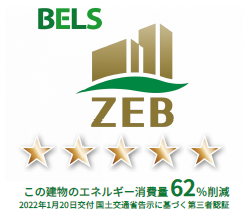
BELS (Building-Housing Energy-efficiency Labeling System) is a third-party certification system that indicates the energy conservation performance of buildings. Since April 2016, under the Act on Improvement in Energy Consumption Performance of Buildings (Building Energy Conservation Act), real estate companies, etc. have been required to strive to indicate the energy-saving performance of buildings. Specific labeling methods are established in the guidelines for labeling energy-saving performance of buildings, and BELS are evaluated based on these guidelines. Until March 2024, the evaluation was shown in five levels (one star to five stars) (based on FY 2016), but from April 2024 onward, the evaluation is shown in seven levels (0 to six stars) for non-residential properties and residential properties equipped with facilities for renewable energy (based on FY 2024).
ZEB (Net Zero Energy Building) is a building that aims to reduce the annual energy consumption of a building to net zero balance while realizing a comfortable indoor environment. In the BELS evaluation system, it is displayed in four stages: ZEB, Nearly ZEB, ZEB Ready, and ZEB Oriented.
Based on FY2024
| Property Name | Certification Rank | Date Certified |
|---|---|---|
| FORECAST Hakata Gofukumachi | ★★★★★ | April 30, 2026 |
| NORE Meieki | ★ | May 30, 2025 |
Based on FY2016
| Property Name | Certification Rank | Date Certified |
|---|---|---|
| La Verite AKASAKA | ★★★★★ ZEB Ready |
July 31, 2020 January 20, 2022 |
| Nishi-Shinjuku Sanko Building | ★★★★★ ZEB Ready |
January 20, 2022 |
| FORECAST Kayabacho | ★★★★ | July 28, 2020 |
| Towa Higashi-Gotanda Building | ★★★★ | July 30, 2020 |
| FORECAST Takadanobaba | ★★★★ | August 07, 2020 |
| Pigeon Building | ★★★ | July 29, 2020 |
| FORECAST Gotanda WEST | ★★★ | August 05, 2020 |
| I•S Minamimorimachi Building | ★★★ | November 30, 2021 |
| Nishi-Gotanda 8-chome Building | ★★★ | May 31, 2024 |
| FORECAST Mita | ★★ | March 09, 2020 |
| FORECAST Kameido | ★★ | July 02, 2020 |
| Shibakoen Sanchome Building | ★★ | July 28, 2020 |
| Itohpia Kiyosubashidori Building | ★★ | July 30, 2020 |
| Itohpia Iwamotocho 1-chome Building | ★★ | July 31, 2020 |
| FORECAST Shinjuku AVENUE | ★★ | November 30, 2021 |
| FORECAST Ichigaya | ★★ | November 30, 2021 |
| FORECAST Waseda FIRST | ★★ | November 30, 2021 |
| Alte Building Higobashi | ★★ | November 30, 2021 |
| Splendid Namba | ★ | November 30, 2021 |
Low-Carbon Model Building
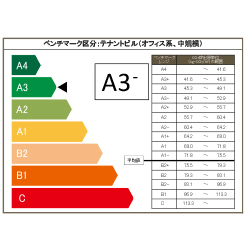
Small and medium-sized leased buildings that (1) fall within the range of A1 or higher in the Low-Carbon Benchmark, an assessment index for low-carbon buildings released by the Tokyo Metropolitan Government in May 2012 with the aim of creating a real estate market in which low-carbon buildings with low CO2 emission features are valued; and (2) are actively implementing energy-saving measures, are officially recognized and publicized as the Low-Carbon Model Buildings by the Tokyo Metropolitan Government.
| Property Name | Low-Carbon Benchmark | Date Publicized |
|---|---|---|
| Itohpia Iwamotocho ANNEX Building | A3- | September 13, 2021 |
| Homat Horizon Building | A3- | November 25, 2022 |
| FORECAST Kayabacho | A2+ | March 16, 2020 |
| FORECAST Ningyocho | A2 | November 25, 2022 |
Kanto District Electricity Use Rationalization Committee
The Kanto District Electricity Use Rationalization Committee annually gives awards to factories, business sites, and individuals who have made significant achievements in the effective use of electricity, promotion of energy conservation, and improvement of load factors.
Fiscal Year 2025
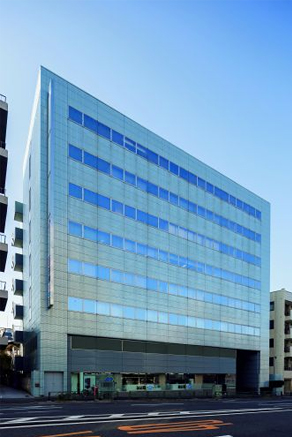
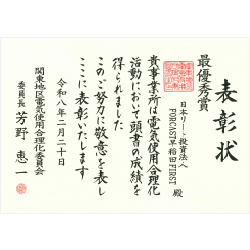
At FORECAST Waseda FIRST, as a result of renewal of air conditioning system and installation of LED lighting, average CO2 emission from January to December 2025 was reduced by 28.4% from the previous year.
Fiscal Year 2024
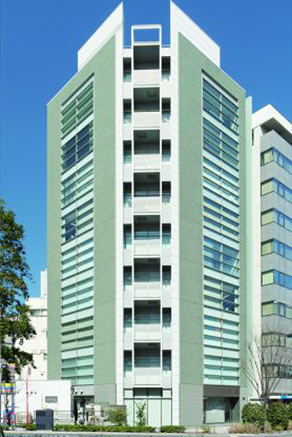
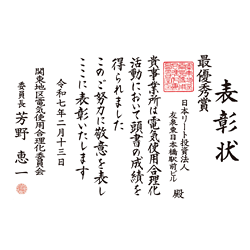
At Yusen Higashi-Nihombashi Ekimae Building, as a result of renewal of air conditioning system and installation of LED lighting, average CO2 emission from January to December 2024 was reduced by 61.7% compared to before the facility renovations.
Fiscal Year 2023
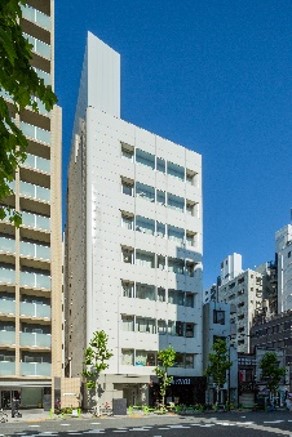
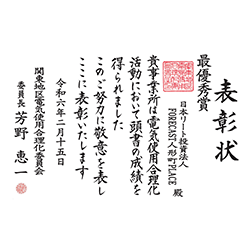
At FORECAST Ningyocho PLACE, as a result of renewal of air conditioning system and installation of LED lighting, average CO2 emission from January to December 2023 was reduced by 17.7% from the previous year.
Fiscal Year 2022
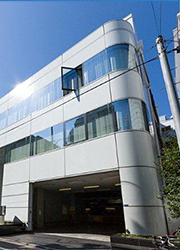
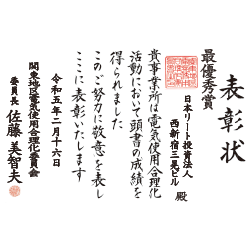
At Nishi-Shinjuku Sanko Building, as a result of renewal of air conditioning system and installation of LED lighting, average CO2 emission from January to December 2022 was reduced by 39.2% from the previous year.
Fiscal Year 2021
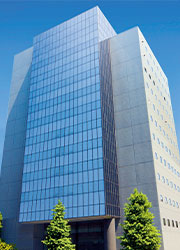
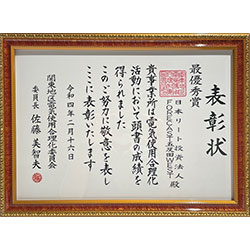
At FORECAST Gotanda WEST, as a result of renewal of air conditioning system and installation of LED lighting, average CO2 emission from January to December 2021 was reduced by 17.9% from the previous year.
Fiscal Year 2020
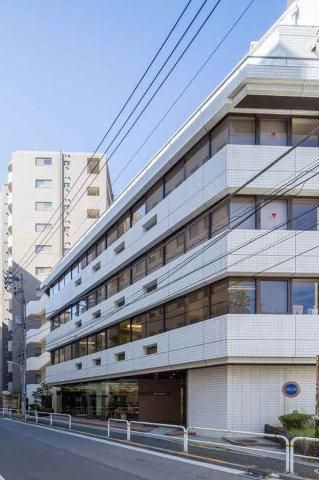
At Towa Higashi-Gotanda Building, as a result of renewal of air conditioning system and installation of LED lighting, average CO2 emission from January to December 2020 was reduced by 35.1% from the previous year.
Fiscal Year 2019
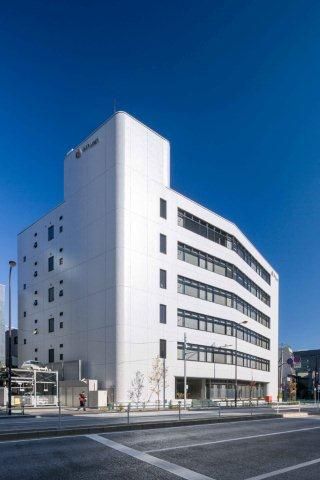
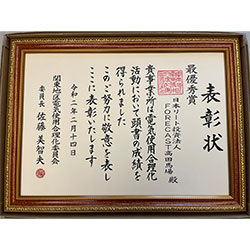
At FORECAST Takadanobaba, as a result of renewal of air conditioning system and installation of LED lighting, average CO2 emission from April to December 2019 was reduced by 63.9% from the previous year.
Fiscal Year 2018
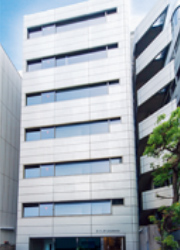
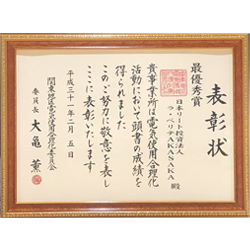
At La Verite AKASAKA, as a result of renewal of air conditioning system and installation of LED lighting, average CO2 emission from April to June 2018 was reduced by 44.8% from the previous year.
Energy Conservation Grand Prize - Awarded "Energy Conservation Center, Japan Chairman's Award" (Nishi-Shinjuku Sanko Building)
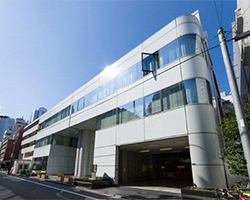
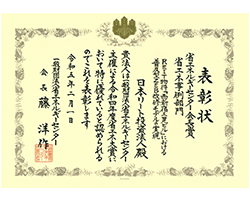
The Energy Conservation Grand Prize, sponsored by the Energy Conservation Center, Japan, is an annual award that recognizes excellent energy-saving efforts that have been implemented by businesses and workplaces as a model for others, as well as products and business models with excellent energy-saving performance. Every year, the Ministry of Economy, Trade and Industry sponsors and awards certificates (Minister of Economy, Trade and Industry Award; Agency for Natural Resources and Energy Director Award; Small and Medium Enterprise Agency Director Award).
Nishi-Shinjuku Sanko Building won the "Energy Conservation Center, Japan Chairman's Award" in the 2022 Energy Conservation Grand Prize. At the 34-year-old Nishi-Shinjuku Sanko Building, based on the sustainability policy that serves as a guideline for ESG initiatives, the owner and contractor worked closely together to establish a ZEB model case for an urban tenant building. It was highly evaluated for achieving an energy reduction of 57.59 kL/year in crude oil equivalent on a design value basis, and for establishing a ZEB retrofit model case.